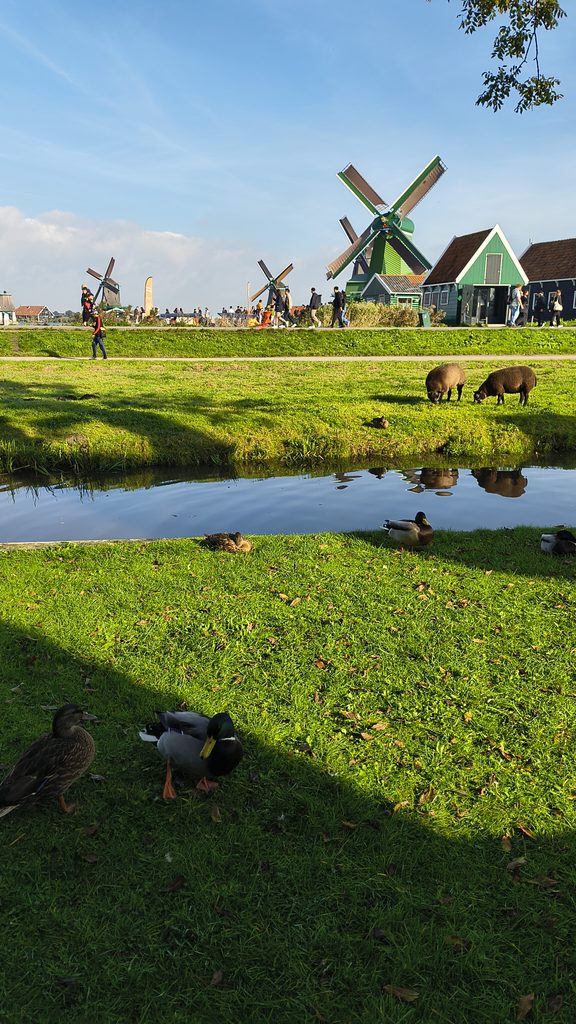
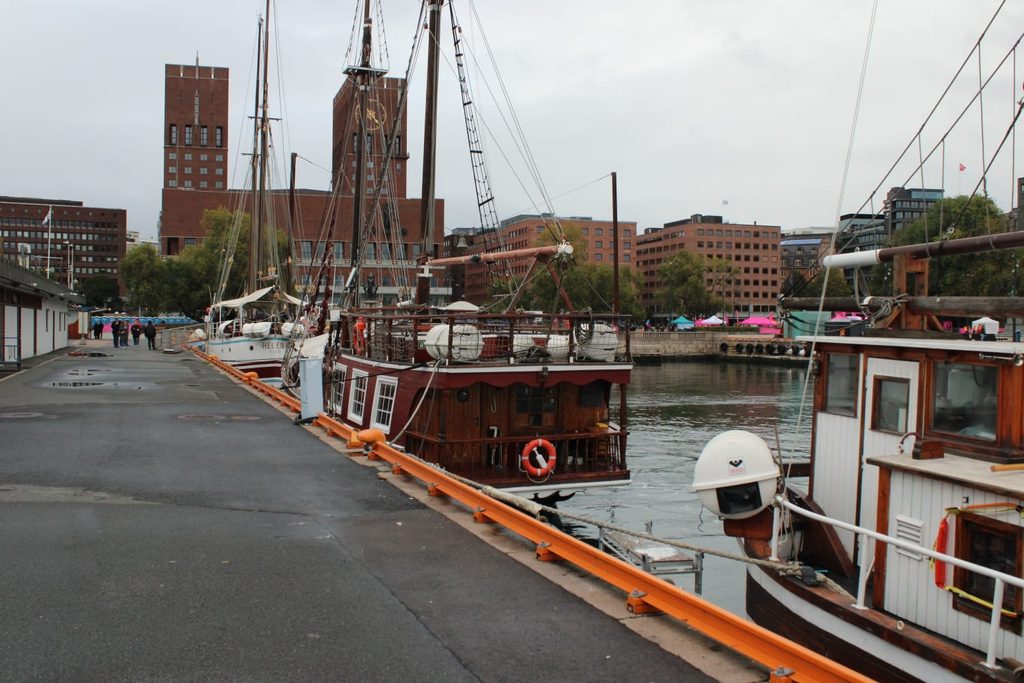
Recently, I went on a trip to the Netherlands and Norway. In case you have never been there, they are beautiful places, by the way (see 2 pictures below, NL on the left; NO on the right). During this trip, I went to the Paul Meehl Annual Meta-Research Symposium (October 8, 2026). The first presentation was from Gilad Feldman titled “New world of possibilities: Using AI to improve science and open science practices“. 15 minutes into the presentation, I realized that my perspectives about science were wrong. Well, more specifically, my views on its current state so far.
Background on my views
To give you first a background of what shaped my views: I’ve been working in psychological research here in Brazil, first as a research assistant in 2017-2020, then as MSc. 2021-2022; then my PhD from 2023-2025. I still work in research, but many of my views have changed since 2017.
As a research assistant, I was a science idealist: science is perfect. If it’s not science, then it does not need any of my attention. I was arrogant, rude, and very, very entitled. Of course, I grew up in a small town in the middle of nowhere in one of the poorest Brazilian states. I was a punk, but science put guardrails I thought I needed on me. I thought there was one true method for everything, even things that do not require science. Like the band Tool and their Ænema album. See, for example, how Forty six & 2 was constructed, with method.
Such arrogance of mine.
By the end of 2020, after a harsh pandemic and many collaborations within and outside of Brazil, I became another person, with a view of science despair: science is made poorly, and most of it by terrible people trying to advocate for shitty things. Still, I got a passion for it, and could not get myself to leave it just yet. However, I lived in Brazil, and here and in many other countries in the Americas, like the USA, productivity is measured by the number of publications, not by their quality. Which brought me to publish the best science I could at the time and pressure I had, but still not the best science.
The best science I could do was fast, done by small contributions to small projects, in order to get my name in papers I did not even care about. On the side, I was specializing in Psychometrics, my passion at the time. I began studying psychometrics because I fully believed that the methods used in science lacked….something, rigor perhaps, even though I did not have that rigor myself in my own publications.
What about it?
Ok, this text is not about me. It’s about science. What can we get from the things I just said?
This pressure, this thing in our system here in the Americas, puts us in a situation of turning a blind eye to our own work while judging others’ work to make us feel greater than them. We have incentives to compete because either we were colonized and lack resources, or, in the case of the USA, invest in war and give the spoils to the rich, which makes them lack research resources for science.
Are we really making good science? Is good even a thing? Well, I’m sure that from my practice, the best science I did was not good, but not bad either.
I believe that I would feel even more fulfilled in my scientific endeavors if I had the time to invest in doing science! I want to study, do something worthwhile, and make good connections. I wanted to be a scientist because I think it’s important to society and it’s fun. After all, I’m a punk, but also a nerd. So, why should I hurry up and do science if I’m not fulfilled?
Until I understood what this fulfillment meant to me, it was almost too late. I was almost leaving science for good, but my experience in the NL/NO, beginning with those 15 minutes of presentation, showed me that science is done differently in every place, and I could do it differently from what I’m used to. I can actually impact peoples life in a good way. Do science that will both bring science forward and bring good things for some population.
Looks like many places in Europe, at least in the places I visited, slow science is the motto. Even more importantly, you can work on projects you are actually interested on! What a dream, am I right? After some exchanges with colleagues in the NL, NO, I saw what was waiting for me there. Fulfillment.
I have met great colleagues there who care about me, my research, and are really nice people. I know there’s still some competition in those places, but you have no idea how intense it is outside that environment.
I’m not in a science idealist nor a science despair phase anymore. More like a science repair state, where I truly believe science can be reliable, more community-driven/that gives back to the community, and that science can be fun again.
We need to stop competing and should work together for better science. You should not view me as an enemy because we are applying for the same job position or grant. We want the same thing: a good future for us, our children, nephews, or even other people’s children.
I want to do slow science. And I’m already getting there, due to those interactions with my colleagues.
Europe, wait for me. I’m coming.